Amplified Bible offline
- 4.8
- Rating
- 100.00K
- Installs
- Free
- Price

 Analysis by App-foxy
I spent time with Amplified Bible offline as a practical reading app rather than treating it like a full study platform. Its main appeal is straightforward: it puts the Amplified Bible on an Android phone in a form that can be used without a constant connection. That makes it useful for quiet reading, travel, church visits, or any moment when I want to open Scripture without first checking signal strength.
The app sits in the Libraries & Demo category and is developed by KJV Bible offline. It is free to install, suitable for Everyone, and currently listed as Amplified Bible Free OFFLINE 16.0. The store listing shows a 4.8 average from around twelve thousand ratings, with over one hundred thousand installs. Those figures suggest that the app has found a clear audience, but they do not change the most important question: whether its simple offline approach fits the way you personally read the Bible.
How the current app feels in everyday use
My first impression was that this is an app built around access rather than distraction. The name tells you what to expect: an Amplified Bible reader that is intended to remain available offline. I did not approach it expecting elaborate study tools, a social reading community, or the broad library found in some subscription Bible platforms. Its value is narrower and, for many people, more useful because of that focus.
You May Also Like

 Blood Strike: 2.5 Anniversary
Blood Strike’s Loadouts Turn Every Drop Into a Tactical Gamble
A close look at Blood Strike’s custom loadouts: how fast access to signature weapons reshapes its battle royale rhythm, rewards preparation, and narrows the gap between fights.

 Pandora - Music & Podcasts
Pandora’s Music Is Easy to Start, but Harder to Recover
Pandora’s strength is its low-effort path from a seed to a station. Its weak spot is how much confidence it asks you to place in connection, setup, and quiet recovery.

 8 Ball Pool
 Is Built on Rivalries, Rematches, and Routine
A close look at the rivalries, rematches, shared routines, and unanswered safety questions that turn a quick pool match into a persistent mobile community.

 Samsung Music
’s Quiet Strength Is Playing What You Already Own
Its reach comes less from spectacle than from dependable access to a personal library. That simplicity is both the app’s strongest retention engine and its ceiling.

 AccuWeather: Weather Radar
AccuWeather Review: A Quick, Clear Forecast for Everyday Decisions
For everyday plans, the best forecast is the one you can understand quickly. AccuWeather makes rain timing, radar, and local conditions easy to act on, with a few trade-offs.

 Hill Climb Racing
Why Hill Climb Racing Still Turns Crashes Into One More Run
A tiny car, a bumpy hill and one more upgrade: Hill Climb Racing keeps resurfacing because its simple chaos makes every near-miss feel personal.
More From Our News Desk



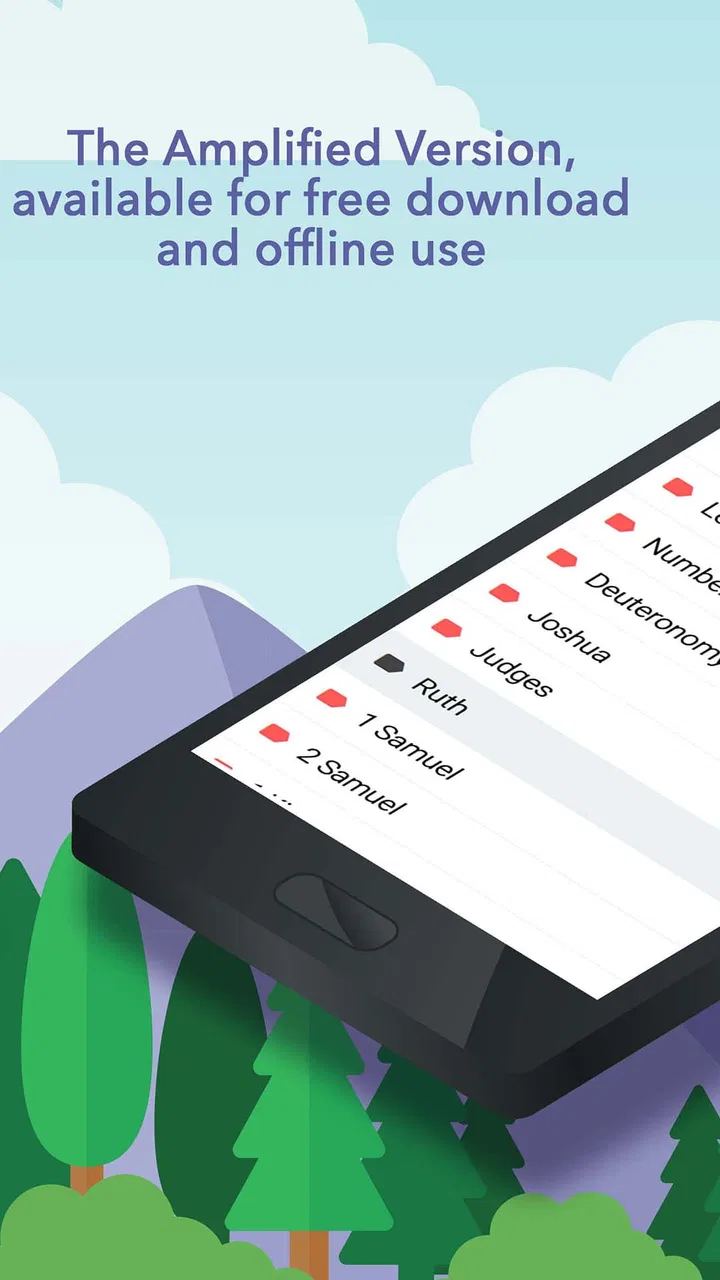
For a short reading session, the basic workflow is easy to understand. I can open the app, move to a book and chapter, and start reading without making the experience feel like a research project. That matters on a phone, where too many controls can make a supposedly simple devotional routine feel unnecessarily busy.
The offline emphasis is especially helpful in situations people often overlook. I might be reading during a flight, in a building with poor reception, on a rural trip, or in a room where I prefer to keep mobile data turned off. A web-based Bible can be perfectly good when a connection is available, but it becomes less dependable when the network disappears. Here, the central purpose is to keep the text close at hand.
I also found the app better suited to deliberate reading than to constant comparison between translations. The Amplified Bible adds explanatory wording within the text, so the reading experience is different from a very plain, compact translation. That can help when I want to slow down over a passage and notice shades of meaning. It can also make a chapter feel denser, which is worth remembering if you prefer a very fast reading pace.
Who will get the most from it
This is a good match for someone who wants one Bible translation available on a phone without paying an upfront price. It also makes sense for readers who already like the Amplified Bible and do not need a large collection of translations, commentaries, audio editions, or group functions. A person preparing a simple daily reading habit may appreciate having a dedicated app instead of opening a browser and searching for the same text repeatedly.
I can also see it helping students and small-group participants who need to check a passage away from a desk. The offline design removes one small but recurring obstacle: finding a reliable connection before reading. That sounds minor until it interrupts a routine several times in a week.
It is less convincing for readers who want a complete digital study workspace. If your normal method involves comparing several translations side by side, consulting extensive notes, following a structured reading plan, or listening to narrated chapters, a larger Bible platform may be a better choice. This app’s strength is not trying to replace every Bible tool on your phone.
A realistic reading routine
Imagine leaving home for a weekend where reception is unreliable. Before going, I would open the app while connected, make sure the Bible is ready for offline reading, and then use it during a morning routine without depending on hotel Wi-Fi or mobile data. I could read a chapter with coffee, return to a difficult verse later in the day, and continue in the evening without changing apps or searching again.
That routine also reveals an important trade-off. Offline access is excellent for availability, but it does not automatically create a complete note-taking system. I would still need a separate method if I wanted to record a long reflection, organize themes across books, or share a carefully formatted study with other people. For quick personal reading, that separation is acceptable. For serious research, it adds friction.
What the version history and current listing tell me
The current version is Amplified Bible Free OFFLINE 16.0, while the app was released on March 9, 2018. That combination suggests a product that has remained available over several years and has continued to receive versioned development rather than being left as a one-time download. I would not treat the version number alone as proof of a particular feature, but it does show that the app has an established history.
For someone who used an earlier release, the practical question is whether the present build still preserves the original promise: quick access to the Amplified Bible without needing the internet. In my view, that promise remains the center of the experience. The product has not moved away from its identity to become an overloaded general-purpose library.
The store listing describes it as one of the most useful applications to have on a phone, but I would interpret that as a statement of purpose rather than a reason to install it blindly. Its usefulness depends heavily on whether you value this particular translation and whether offline reading is important to you. A reader who wants the New International Version, King James Version, or a broad multilingual collection may find the app too focused.
The free price is another meaningful part of the current state. I can try the app without committing money at installation, which lowers the barrier for a casual reader. There are in-app purchases priced at $0.99 per item, so “free” should be understood as free to obtain, not necessarily as a promise that every optional element will always be included at no cost. I would check any purchase prompt carefully before confirming it, especially if I only want the basic reading experience.
The Everyone age rating makes the app broadly approachable for families and general readers. That rating does not tell me how well it serves a particular study style, but it does fit the app’s role as a straightforward Bible library rather than a mature entertainment product or a social network.
What changed matters to existing users
For an existing user, a numbered update is most valuable when it improves reliability without making familiar actions harder to find. With an offline reader, stability and predictable access matter more to me than flashy redesigns. If I have built a habit around opening a passage quickly, a good update should preserve that rhythm.
The current release also gives new users a clearer starting point than an old, uncertain download would. I would still install it from the official app source and open it while connected before relying on it during travel. That is a sensible preparation step for any offline library: confirm that the content is available, browse a few books, and make sure the app behaves as expected on your device.
One useful habit is to avoid waiting until the exact moment you need the app. If I am heading somewhere with limited connectivity, I would launch it at home, move through more than one section, and confirm that the reader is not depending on a live web page. This is a small test, but it prevents the common mistake of assuming that an app labeled offline has been fully prepared for every device state.
I would also keep the operating-system requirement in mind. The app requires Android 7.0 or later, so it is not intended for every older Android phone. For users with a relatively recent device, that requirement should be easy to meet. For someone preserving an aging handset specifically for offline reading, it is worth checking compatibility before planning around this app.
Small workflow choices that improve the experience
My first practical tip is to use the app as a focused reading space, not as a replacement for every study tool. I would read the passage here, then move to a note app only when I need extensive journaling. That keeps the Bible reader uncluttered and avoids expecting it to perform a job it was not designed to dominate.
My second tip is to use the Amplified wording slowly. The added explanatory language can be helpful when I am examining a verse, but it may feel heavy if I am trying to cover a large amount of text quickly. Reading a shorter section and then pausing to summarize it in my own words gives the translation room to work instead of turning the session into a rushed scroll.
My third tip is to keep a second reference available when interpretation matters. The Amplified Bible is useful for its particular presentation, but no single translation should be treated as the only possible wording for every study question. When a phrase seems especially important, comparing it with another trusted translation can reveal where the Amplified text is expanding an idea. That is not a criticism of this app; it is a sensible trade-off when using any single-translation reader.
A fourth useful approach is to separate offline access from backup expectations. I would not assume that reading locally means my personal notes, highlights, or progress will automatically appear on another phone. If those records matter, I would keep important reflections somewhere I control. The app is most dependable as a place to access the biblical text itself.
Where the app still falls short
The biggest limitation is specialization. The app gives the Amplified Bible a dedicated home, but that focus can feel restrictive beside large Bible applications that combine many translations, commentary collections, audio, maps, plans, and cloud synchronization. Those alternatives may be better for users who move between devices or work through a structured study program.
There is also a difference between offline availability and a polished offline study environment. Having the text on the phone is valuable, but advanced readers may want cross-references, original-language tools, footnotes, visual navigation, or robust search controls. I would not choose this app as my only resource for academic preparation or detailed sermon research unless its available reading tools already match my needs.
The free model can introduce its own moment of hesitation because optional in-app purchases exist. A reader who wants a completely uncomplicated experience may prefer an app with one clearly stated purchase or a fully open-source approach. Here, I would treat the free installation as an opportunity to test the core reader, then decide whether any optional item is genuinely useful.
Another limitation is platform scope. The listed minimum operating system is Android 7.0, so this review is most relevant to Android users who meet that requirement. Someone looking for a shared reading setup across Android, iPhone, tablet, and desktop should compare the app’s practical availability with a service designed around synchronized accounts. A dedicated offline reader may be simpler, but simplicity can mean fewer ways to carry a study history between devices.
I would also skip it if I do not specifically want the Amplified Bible. The app’s identity is not a minor detail that can be ignored. If I prefer a different translation, installing this one merely because it is free would likely create more clutter than value. The better choice would be a reader centered on the translation I actually return to.
How it compares with usual alternatives
Compared with reading the Bible in a mobile browser, this app has a clear convenience advantage when I am offline. I do not need to find a page again or depend on a site loading correctly. The browser alternative may offer broader translation choice and easier sharing, but it is less dependable in weak-signal situations.
Compared with a large Bible study app, Amplified Bible offline feels calmer and more limited. A full-featured platform can win for research, synchronization, and community-based reading plans. This app can win for a person who wants one translation, a smaller footprint in daily attention, and a direct path from opening the app to reading.
Compared with a downloaded ebook or document, the Bible app is more natural for moving through biblical books and chapters. An ebook may be easier to annotate in some reading systems, while a dedicated app is usually more comfortable for returning to Scripture as a reference. The right choice depends on whether I prioritize a familiar book-reader interface or a Bible-specific navigation flow.
Compared with a paper Bible, the phone version is lighter and immediately available in places where carrying a physical book is inconvenient. Paper remains better for distraction-free reading, visible page memory, and handwritten notes. I would use this app when portability and offline access win, not because it makes paper obsolete.
My recommendation after using it
The strongest reason to choose this app is dependable access to the Amplified Bible without turning a simple reading session into a complicated digital study project. That makes it a sensible free option for personal devotion, travel, quick reference, and readers who already value this translation.
I would recommend installing it if you want an Android Bible reader that stays focused, costs nothing to start, and is designed around offline use. I would prepare it before travel, test a few passages while connected, and keep a separate place for important notes. Those small steps make the app more useful and prevent unrealistic expectations about synchronization or advanced study features.
I would not make it my first recommendation for someone seeking a complete Bible ecosystem. If you need several translations, audio, detailed commentary, collaborative plans, or a study history that follows you across devices, a broader alternative will probably serve you better. The same is true if you do not enjoy the Amplified Bible’s expanded wording.
Overall, I see Amplified Bible offline as a practical, narrowly defined tool rather than an all-purpose religious library. Its established release history, current version, free entry point, and strong user response make it worth trying for the right reader. Just approach it for what it does best: keeping one specific Bible translation ready to read when a connection, a subscription, or a crowded feature set would only get in the way.
FAQs for Amplified Bible offline
01What is Amplified Bible Offline, and how does it work?
Amplified Bible Offline is a Bible-reading app designed to let you access the Amplified Bible without a continuous internet connection. After installing the app and completing any required initial download, you can browse books, chapters, and verses directly on your Android or iOS device. Its expanded wording helps explain key terms and expressions, making passages easier to understand during personal study, church preparation, or devotional reading.
02Can I use Amplified Bible Offline without an internet connection?
Yes, the main purpose of Amplified Bible Offline is to provide access to Scripture when you are not connected to Wi-Fi or mobile data. Offline availability may depend on whether the Bible content has been downloaded successfully during setup. Internet access can still be necessary for the initial installation, updates, advertisements, synchronization, or other online features included in the particular version you download.
03Does Amplified Bible Offline include search, bookmarks, and reading tools?
Most versions of Amplified Bible Offline include practical tools such as keyword search, bookmarks, notes, history, and options for adjusting text size or display settings. These features make it easier to return to familiar passages or locate verses quickly. However, the exact tools can vary between editions and platforms, so it is worth checking the app listing before downloading if a specific study feature is important to you.
04Is Amplified Bible Offline free to download and use?
The app may be available as a free download, but the overall experience can differ depending on the publisher. Some versions are fully free, while others may contain advertisements, optional in-app purchases, or premium features. Before installing, review the store listing for pricing details, permissions, advertising information, and whether all Bible books are available offline without an additional payment or subscription.
05Is Amplified Bible Offline suitable for serious Bible study?
Amplified Bible Offline can be useful for personal reading, devotional routines, sermon preparation, and comparing the expanded wording of the Amplified translation. Its offline access is especially convenient for travel or areas with unreliable connectivity. Nevertheless, it should not automatically be treated as a complete study library. Readers who need scholarly notes, original-language tools, cross-references, or multiple translations may want to use it alongside a more advanced Bible study application.
Pros
- Works without an internet connection after the Bible text is downloaded.
- Includes expanded wording that clarifies meanings beyond a standard translation.
- Useful for personal study
- devotionals
- and quick verse lookup.
- Search tools make it easy to find words
- passages
- and familiar verses.
- Offline access can reduce mobile data use and improve reading while traveling.
Cons
- The expanded translation can feel wordy compared with more concise Bible versions.
- Some study features may vary depending on the app edition or device.
- Offline downloads may require noticeable storage space on your phone.
- Older devices may experience slower navigation with large text databases.
- Users seeking many translations may find the selection more limited.

Amplified Bible offline
Gallery